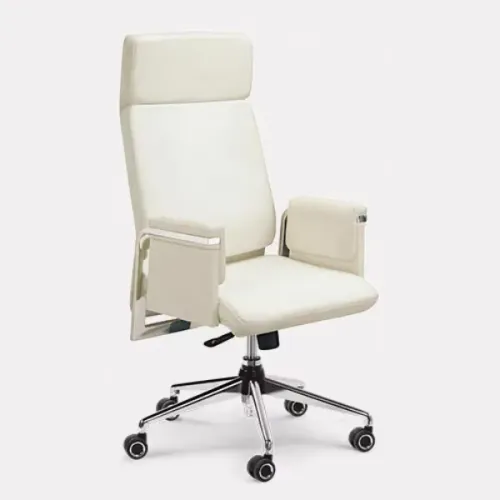
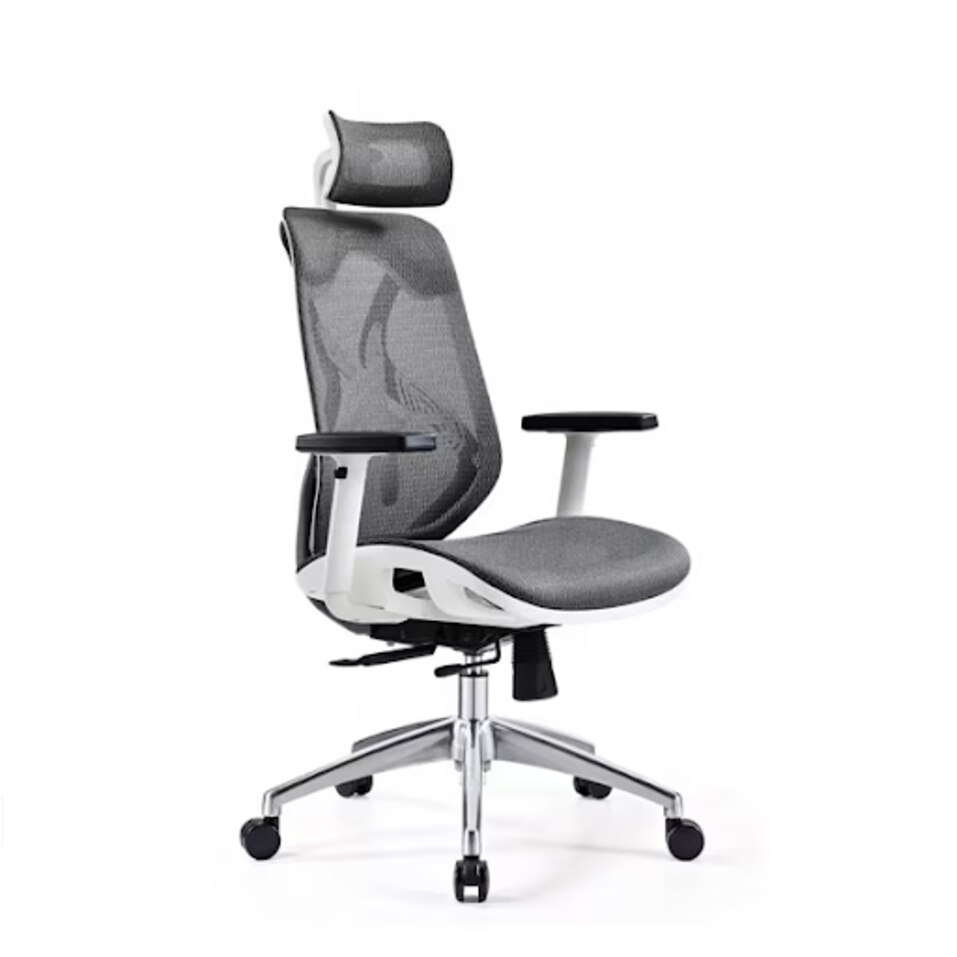
A comfortable revolving chair depends on more than a polished showroom sample or the phrase “ergonomic.” You will be able to separate a real manufacturer from a trader, compare measurable chair specifications, test user fit, verify durability evidence, and structure a Delhi office purchase that remains supportable after installation.
Key takeaways
- Ask for records linking each component to the supplied chair model.
- Measure seat height, depth, width, and desk clearance before ordering.
- Test the mechanism, gas lift, base, casters, and lumbar support for eight-hour use.
- Compare pilot results, warranty coverage, replacement terms, and total landed cost.
How to Tell a Delhi Manufacturer from a Trader or Importer
A search result for “revolving chair manufacturer Delhi” proves nothing about who made the product. To separate trader versus manufacturer, ask where the frame, gas lift, mechanism, base, casters, upholstery, and final assembly originate, then demand records that connect those claims to the supplied model.
1. Visit the factory address shown on the quotation. Look for incoming inspection of gas lifts and mechanisms, welding or joint checks, dimensional measurement, upholstery sewing, functional testing, packaging, and labelled production batches.
2. Request photographs or a live video of the line, material samples, inspection forms, and batch-traceability records. A showroom with finished chairs is not office chair factory verification.
3. Order one pre-production sample and retain it as the acceptance reference. Write permitted tolerances for seat dimensions, colour, stitching, mechanism operation, and base components into the purchase order, then compare the bulk chairs against it.
4. Ask for the tested chair configuration, ANSI/BIFMA standard edition, laboratory, report number, and load limitations. A nominal user-weight figure or the phrase “BIFMA-certified chair” does not prove complete static-load, durability, caster, armrest, and backrest testing.
5. Check that the legal business name on the GST invoice matches the quotation, factory records, warranty, and bank account. Ask for comparable-office references, spare-parts availability, response times, and written warranty coverage.
Evaluate freight, floor delivery, assembly, packaging removal, access restrictions, damage handling, and return logistics in the installed price. Local assembly is valuable only when the supplier can reproduce the approved chair and service it within your required response window.
Compare Chair Dimensions and Test the Fit Before You Buy
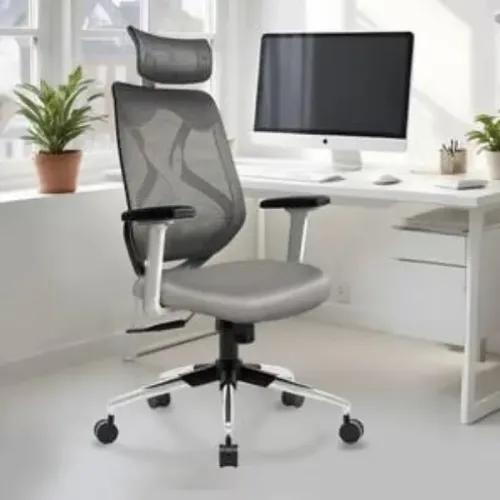
Measure the desk and users before comparing office chair dimensions. A chair suits your workplace only when its seat height range, seat depth, back support, arms, and base work together at the actual desk.
| Measurement or check | Pass signal | Failure sign |
|---|---|---|
| Seat height range | Shortest user keeps both feet flat; tallest user reaches the desk without raised shoulders | Feet dangle, knees press the underside, or elbows sit above the work surface |
| Seat depth | Two to three fingers remain between the seat edge and the knee crease, with the back supported | The pan cuts behind the knees or leaves the lower back unsupported |
| Backrest and lumbar | Lumbar support contacts the lower back and remains supportive through recline | A fixed bulge lands above or below the lumbar curve |
| Armrests and desk | Arms support relaxed shoulders and slide under the desk when needed | Armrests hit the desktop or force the chair too far away |
| Base and casters | Five-star base and caster spread fit the floor area without striking furniture | The base catches desk legs or limits turning |
Run an ergonomic chair fit test with the shortest and tallest expected users, not just one showroom volunteer. Ask each person to type, reach, swivel, recline, and return upright for at least 20 minutes. Check that recline tension matches body weight, the back moves without losing support, and the feet stay flat.
Record the seat depth, armrest interference, desk clearance, noise, caster movement, and installation defects. A chair comfortable for five minutes can still fail during a full workday.
Match the Mechanism and Construction to Eight-Hour Office Work
Choose a chair by its usable adjustment range, not by its feature count. For eight-hour work, verify seat height, seat depth or pan position, back-height movement, recline resistance, and armrest height and width. Shorter users must keep both feet flat; taller users must retain thigh support and back contact.
| Feature | Daily-use value | Mainly adds cost when |
|---|---|---|
| Seat-height and depth adjustment | Matches different leg lengths and desk heights | The range suits only one user group |
| Synchro tilt mechanism | Lets the back and seat move during posture changes | Recline tension is fixed or the lock has no usable work position |
| Adjustable lumbar support | Places support at different lower-back heights | A fixed lumbar bulge serves only one body shape |
| 3D 4D armrests | Supports forearms and clears the desk during recline | Pads move in several directions but hit the desktop |
| Mesh or quality upholstery | Controls heat or improves cleanability for the setting | A premium fabric hides weak foam or poor stitching |
| Polished base or headrest | Meets a visual or task-specific requirement | Neither improves fit, stability, or desk work |
Ask for the exact five-star base, casters, gas lift, foam, upholstery, mechanism, and armrest configuration. Materials and components change durability, noise, and stability; a report for another version proves little. Request BIFMA chair testing details: ANSI/BIFMA X5.1 edition, laboratory, report number, tested model, load limits, and component limitations. “BIFMA compliant” alone is not evidence.
Pilot the exact chair at real desks and record recline behaviour, caster noise, armrest interference, and installation defects.
Use Samples, Pilots, Warranty Terms, and Landed Cost to Make the Final Choice
A showroom sample proves only that one chair was comfortable once. To verify a large order, make the approved sample the contract reference and test the supplier’s ability to reproduce it.
1. Order an office chair pilot order for representative rooms, not the reception area alone. Have the shortest and tallest relevant users work at your actual desks, then record seat-depth fit, armrest interference, recline behaviour, caster noise, rolling resistance, and installation damage.
2. Retain the signed pre-production chair and write permitted tolerances into the purchase order for seat height, dimensions, upholstery seams, colour, welds, and mechanism operation. Audit incoming gas lifts and mechanisms, joint quality, dimensional checks, batch traceability, final inspection, packaging, and the supplier’s process for matching every batch to that sample.
3. Demand a written chair warranty that states coverage for the frame, mechanism, gas lift, foam, fabric, casters, and labour separately. Specify response time, escalation for repeated failures, and a written period for replacement parts, including gas lifts, casters, arm pads, mechanisms, and upholstery covers.
4. Compare landed installed cost, not ex-factory price. Include freight, floor delivery, assembly, packaging removal, access restrictions, GST documentation, installation damage, spare parts, and return logistics. A locally assembled chair can win if Delhi service capacity and parts availability meet your response requirement.
Before approval, specify caster type for your floor and upholstery resistance to abrasion, disinfectants, stains, and colour loss. Kantoor Furniture By 360 Degree Interiors should provide this evidence for the exact approved configuration, not a similar showroom model.
Related products
 | CEO Chair Series Premium Ergonomic High-Back Executive Office Chair Kantoor Furniture By 360 Degree Interiors The Premium Ergonomic High-Back Executive Office Chair is designed for professionals who require a... View product → |
 | CEO Chair Series Sleek Series High Meeting Chair Premium High-Back Meeting & Conference Chair Kantoor Furniture By 360 Degree Interiors The Sleek Series High Meeting Chair is a contemporary... View product → |
Choose the Right Chair Type for Desks, Counters, and Public Spaces
Choose chairs by work surface and traffic pattern, not appearance: task chairs suit adjustable-height desks, executive chairs suit private offices, conference chairs suit short meetings, and public-facing seats need cleanable upholstery and replaceable parts.
| Type | Seating height and use | Maintenance and specification |
|---|---|---|
| Task chair | Desk-height seat with height, depth, back, recline, and arm adjustments for prolonged work | Specify caster type for the floor, replaceable gas lift, and washable, abrasion-resistant upholstery |
| Executive chair | Desk-height seat with a deeper, wider frame and more padding; confirm it fits under the desk | Check seams, foam recovery, base finish, and whether the heavy upholstery can be repaired |
| Conference chair | Fixed or lightly revolving seat for meeting tables; avoid excessive height or recline | Choose compact, wipe-clean surfaces and durable edges for frequent movement |
| Revolving counter chair | Taller seat with a foot ring and height range matched to the counter | Protect the gas lift from spills and specify a stable base, cleanable cover, and replacement foot ring |
| Bar stool | Tall fixed or revolving seat matched to bar stool height, not a standard counter | Require a secure footrest, stable base, and upholstery resistant to repeated cleaning |
Treat upholstery as a service decision. Compare seam construction, abrasion resistance, colourfastness, disinfectant resistance, and replacement availability; obtain the required fire classification for regulated or assembly spaces. Ask shorter and taller users to keep their feet supported and their backs against the chair before approving any type.
Frequently asked questions
How can you tell a Delhi chair manufacturer from a trader or importer?
Ask where the frame, gas lift, mechanism, base, casters, upholstery, and final assembly originate. Request records that connect those claims to the exact supplied model.
Which chair dimensions should you compare before buying?
Compare seat height range, seat depth, seat width, back height, armrest clearance, base diameter, and the space available beneath your desks. Test the fit with the users and desks that will receive the chairs.
What should an office chair mechanism withstand during an eight-hour workday?
Test seat-height adjustment, tilt control, tilt lock, back support, gas-lift stability, caster movement, and base construction. Match the mechanism and upholstery to the expected hours and user weight range.
How should you evaluate a chair manufacturer before placing a large order?
Run a sample or workplace pilot, record user feedback, confirm warranty coverage and replacement procedures, and compare the landed cost rather than the unit price alone.
Which revolving chair type suits desks, counters, and public spaces?
Use an adjustable task chair for desks, a suitable-height stool or drafting chair for counters, and durable, easy-to-maintain seating for public spaces. Check floor protection, cleaning needs, traffic, and stability.
Related products
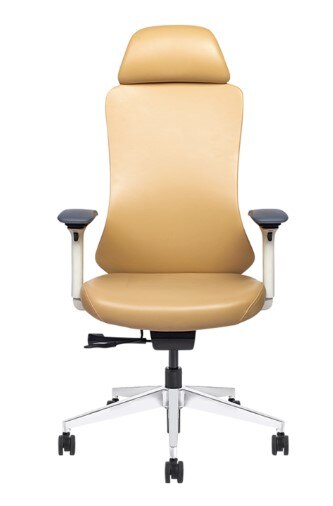 | CEO Chair Series Premium Modern High-Back Executive Ergonomic Office Chair Diamond Sleek Chair, High Back Premium Modern High-Back Executive Ergonomic Office Chair Kantoor Furniture By 360 Degree Interiors Kantoor Furniture... View product → |
 | Manager Chair Series by Kantoor Furniture is a premium office seating solution designed for managers, team leaders, executives, and professionals who require superior... View product → |