A classroom can contain sturdy desks and still leave pupils with unsupported backs, raised shoulders, trapped knees, or too little room to move. You will be able to specify matched desk-and-chair sizes, plan usable layouts, compare materials, run a sample-unit test, and set a maintenance plan that protects comfort over time.
Key takeaways
- Use EN 1729-1 stature ranges, not age alone, to select desk and chair sizes.
- Leave clear routes for movement, teaching access and wheelchair users.
- Test samples for posture, storage, sharp edges, noise and cleaning effort.
- Include repairs, replacement parts and relocation costs before choosing fixed furniture.
Match Desk and Chair Dimensions to Pupil Body Size
Use pupil stature and lower-leg length, not age alone, to select each classroom seating size. A six-year-old and a tall ten-year-old can need different furniture, while pupils in the same year can need the same size. Use the size marks and stature ranges in EN 1729-1 to plan mixed-size rooms or phased replacement.
Ask the manufacturer for a documented schedule showing, for every model:
- Intended pupil-stature band and EN 1729-1 size mark
- Seat height, seat width, and seat depth
- Desk height, writing-surface clearance, and under-desk legroom
- Adjustment range, if the product is adjustable
Check each proposed set with pupils seated in normal shoes. Their feet should rest flat on the floor, knees should sit near a 90-degree angle, and the seat should support the thighs without pressing behind the knees. Their backs should contact the backrest, with enough clearance for movement.
While writing, elbows should rest near the desktop without raised shoulders or a hunched back. These checks turn classroom seating ergonomics into an observable fit test.
Adjustable school furniture suits rooms where pupil sizes change quickly, but inspect locking devices, pinch or shear points, loose adjustment hardware, and ease of operation by staff. Specify EN 1729-2 compliance and a maintenance schedule for those mechanisms.
A fixed chair that fits only the average pupil creates discomfort at both extremes; a matched desk-and-chair set supports better posture for more pupils.
Plan Room Capacity Without Sacrificing Movement or Access
Choose single-seater versus two-seater desks by the lesson pattern, not by maximum headcount. Single-seaters give each pupil personal space, simplify examination spacing, accommodate left-handed students, and allow damaged units to be replaced individually.
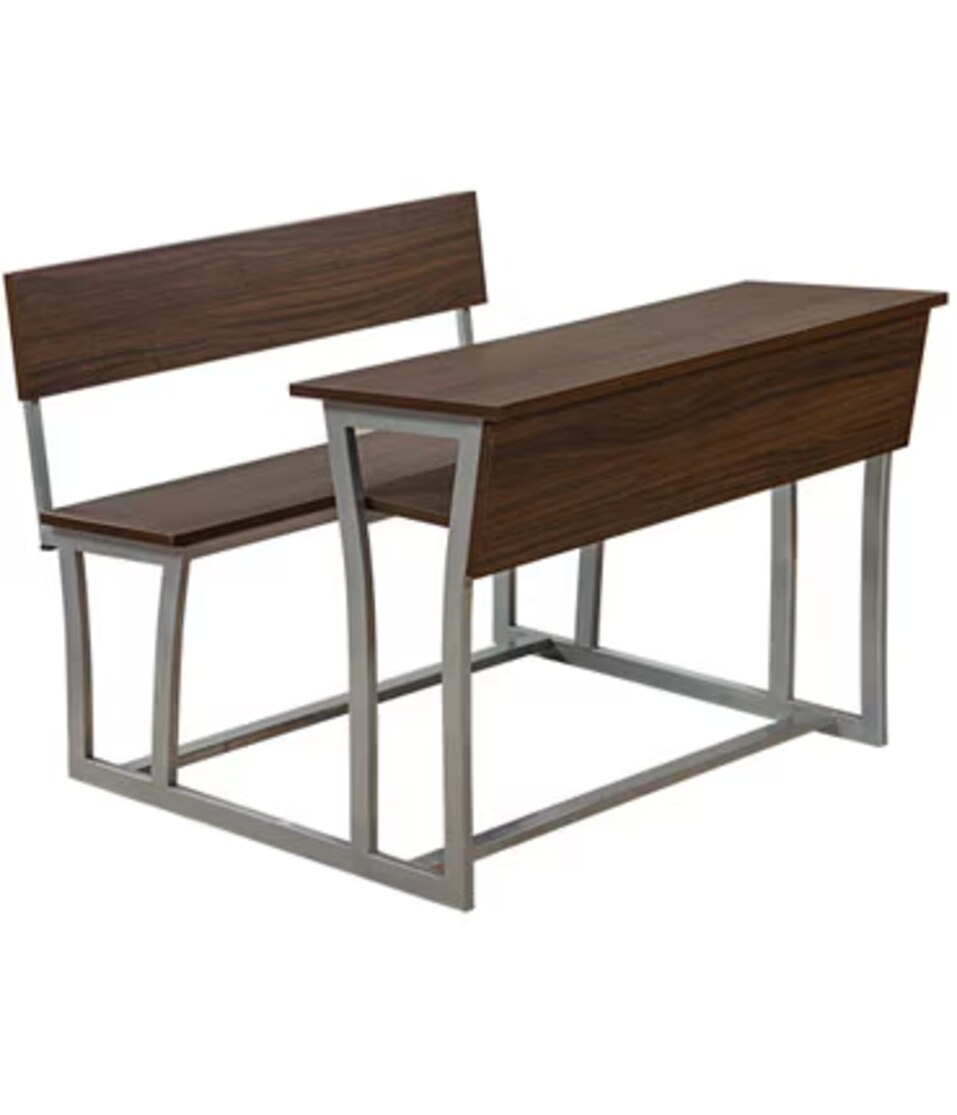
Two-seaters use floor area efficiently and support paired work, but separating pupils for tests takes more time and moving heavier joined units disrupts circulation.
| Option | Best use | Main advantage | Limitation |
|---|---|---|---|
| Single-seater | Examinations, mixed needs, frequent rearrangement | Individual spacing and flexible classroom layout | More floor gaps and separate units to manage |
| Two-seater | Stable rows and paired activities | Efficient capacity and quick partner work | Less flexible access and wider movement loads |
Keep classroom aisle width sufficient for pupils, staff, and a wheelchair to pass without turning sideways; confirm the measurement against local building and fire rules. Do not place bags, spare chairs, or protruding desk legs in the route. Preserve a continuous path to each exit so furniture does not compromise emergency egress.
Arrange rows so the teacher can reach the back without crossing a pupil’s writing space, then test a horseshoe or small clusters for group work. Provide at least one wheelchair-compatible desk with knee clearance and a clear approach route, rather than placing an adapted unit against a wall.
Ask the manufacturer for a scaled classroom layout and a physical trial using both desk types. Walk the smallest and largest pupils through entry, teaching, examinations, group work, and evacuation before approving capacity.
Compare Materials, Storage, Edges, and Noise Before Buying
A chair that survives heavy use can still make a classroom unpleasant if it scrapes, traps dirt, or blocks pupils’ legs. Compare the frame, surface, edge treatment, and storage arrangement together rather than choosing by appearance.
| Material or construction | Comfort and cleaning | Noise, safety, and durability |
|---|---|---|
| Polymer chairs | Wipe clean quickly; moulded contours provide consistent support | Quiet only with suitable glides; inspect for cracking after impact |
| Plywood school furniture | Warm touch and firm writing surface; seal exposed edges against moisture | Check delamination, splinters, and finish wear |
| Metal classroom chairs | Strong frames tolerate repeated dragging and stacking | Powder coating resists abrasion and corrosion when pretreatment is sound; hard feet can be loud |
| Upholstered seating | Reduces contact noise and improves comfort during long lessons | Specify stain cleaning, fabric repair, and replacement; unsealed fabric can retain spills |
A storage rack must leave storage rack legroom under or beside the desk, so bags do not press against calves or force a twisted sitting position. Keep shelves away from knees, prevent sharp corners, and anchor tall units where tipping is possible.
Specify rounded edges on desktops, shelves, and chair backs. Ask for replaceable glides matched to the actual floor: unsuitable soft glides wear quickly, while hard glides on hard floors transmit impact and noise. Include spare glides, fasteners, and seat or back components in the contract.
Finally, test finishes against the Sonipat climate, including heat, dust, humidity, and monsoon moisture. Require an inspection and tightening schedule, plus evidence of educational-furniture testing under EN 1729-2 rather than relying on a static load rating.
Use a Pilot Installation to Test the Manufacturer’s Claims
Do not approve a full classroom order from a catalogue photograph. Ask the school desk furniture manufacturer in Sonipat to place a sample unit in the actual classroom and demonstrate it with the smallest and largest pupils the room will serve.
Use this school furniture procurement checklist during the pilot:
- Compare the chair and desk against the approved size schedule: seat height, seat depth, seat width, desk height, leg clearance and pupil-stature band. Require dimensional drawings and check the matched set against EN 1729-1 dimensions.
- Ask for material samples, edge details and finish specifications. Inspect them after wiping with the school’s cleaning products, and check whether sharp edges, exposed fasteners or splinters appear.
- Require load and stability testing records, including evidence of educational-furniture strength tests to EN 1729-2. A static load rating alone does not show how the chair performs when pupils drag, tilt or load it from one side.
- Walk the installed layout with pupils seated: test aisle movement, writing posture, thigh clearance, feet on the floor, bag storage and inclusive access.
- Demonstrate installation, tightening, stacking, lifting and floor noise on the room’s actual flooring. Record the tools, time and staff needed.
- Obtain the warranty in writing, including exclusions, response times, spare glides, fasteners and replaceable seat or back parts.
Kantoor Furniture By 360 Degree Interiors should be asked to document every pilot defect and correction before the school releases volume production. A failed trial is cheaper than correcting every classroom.
Related products
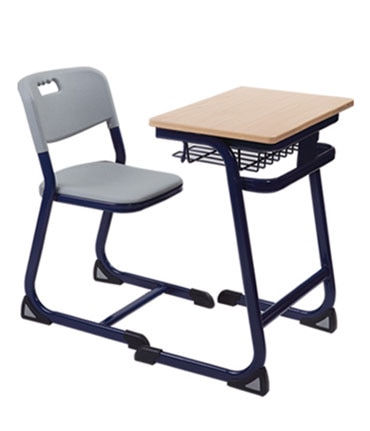 | Classroom Desk & Bench Institutional Single-Seater Modular School Desk & Chair Set School, College, Coaching Centre & Institutional Classroom Furniture Kantoor Furniture By 360 Degree Interiors The Institutional Single-Seater... View product → |
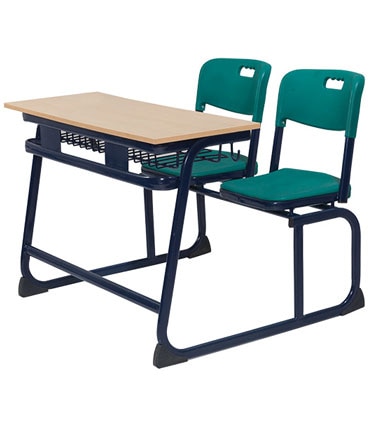 | Classroom Desk & Bench Polymer Student Chair, School Desk with Storage Rack Heavy-Duty Institutional 2-Seater Modular Dual Desk & Chair Set Premium School, College, Coaching Centre & Training Institute Furniture Kantoor... View product → |
Budget for Maintenance and Know When Fixed Furniture Is Wrong
Estimate annual cost per desk-and-chair set by recording inspection time, cleaning time, moves, repairs, and replacements rather than counting only the purchase price. Multiply labour hours by the school’s hourly rate, add transport and storage space, then keep a replacement reserve based on damaged units from the previous year.
Use a classroom furniture maintenance schedule that assigns clear checks:
- Daily: wipe writing surfaces and inspect cleaning access for trapped dirt, sharp edges, loose feet, or damaged seat shells.
- Each month: complete fastener tightening, check glides, and log cracked plastic, splintered edges, and missing hardware.
- Each term: carry out weld inspection, test desk stability, count spare parts, and remove unsafe furniture from service.
- After every room change: check damage caused by dragging, stacking, or lifting.
Specify spare parts such as glides, bolts, seat pans, and backrests in the contract. Local replacement preserves a usable set; replacing an entire desk because one fastener or seat component failed wastes money.
| Arrangement | Ongoing effort | Choose it when |
|---|---|---|
| Fixed two-seater sets | Fewer pieces to move, but repairs and room changes affect two pupils at once | Rows remain stable and the room has one main teaching layout |
| Single-seater sets | More pieces to clean, move, and store, but damaged units are isolated | Exam spacing, mixed group work, or phased replacement matters |
| Stackable chairs with separate tables | Fast storage and quick floor cleaning; stacking height and abrasion need control | A multi-purpose classroom needs frequent layout changes |
Choose flexibility when storage, circulation, or changing class sizes costs less than repeated fixed-layout alterations.
Frequently asked questions
How do you match classroom desks and chairs to pupil size?
Measure pupil stature and lower-leg length, then use the size marks and stature ranges in EN 1729-1. Do not assign furniture by year group alone.
How much classroom space should furniture planning protect?
Plan enough clearance for pupils to move, teachers to reach every desk and wheelchair users to enter, turn and use the room without blocked routes.
What should you compare before buying school desks and chairs?
Compare frame and worktop materials, under-desk storage, rounded edges, cleanability, floor noise and the availability of replacement parts.
When is fixed classroom furniture the wrong choice?
Choose mobile furniture when room layouts change, multiple teaching formats are required or maintenance access matters more than permanent alignment.
Related products
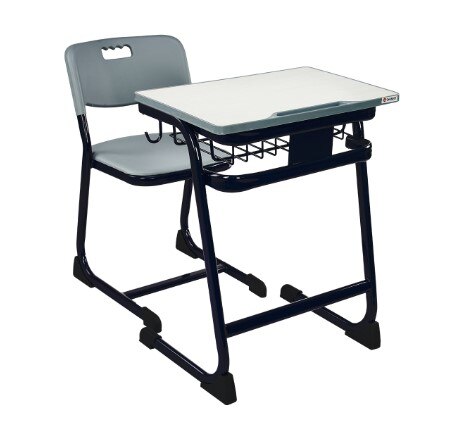 | School Desk And Training Room Chair Zumba Single-Seater School Study Desk & Chair Set Heavy-Duty Institutional Single-Seater School Study Desk & Chair Set School, College, Coaching Centre & Training Institute Furniture Kantoor... View product → |
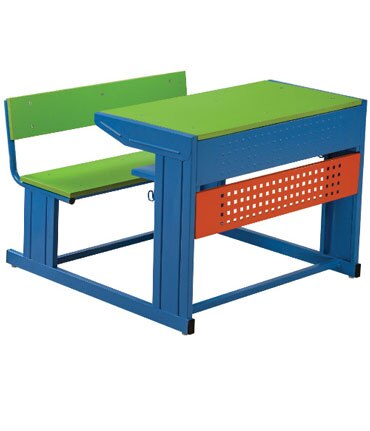 | Classroom Desk & Bench Heavy-Duty Institutional 2-Seater Primary School Dual Desk & Bench Durable Student Classroom Furniture by Kantoor Furniture By 360 Degree Interiors The Heavy-Duty Institutional 2-Seater Primary School Dual Desk &... View product → |
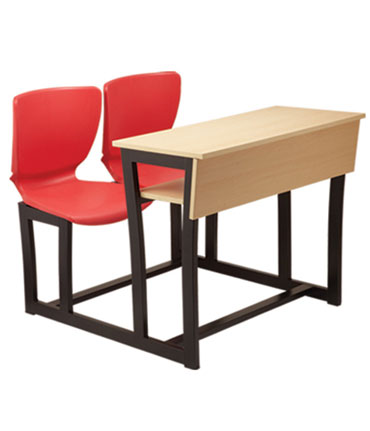 | Classroom Desk & Bench Heavy-Duty Institutional 2-Seater Modular Dual Desk & Chair Set School, College, Coaching Centre & Institutional Furniture Kantoor Furniture By 360 Degree Interiors The Heavy-Duty Institutional 2-Seater Modular... View product → |
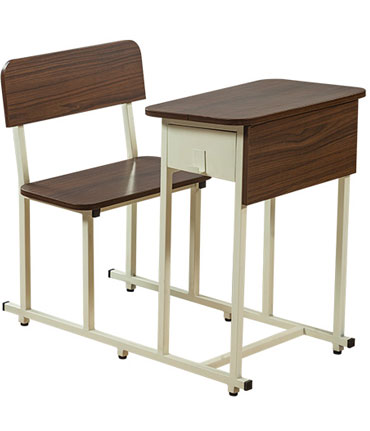 | Classroom Desk & Bench Institutional Single-Seater Student Dual Desk & Bench Classroom Furniture Supplier Delhi NCR | Student Desk with Book Rack Kantoor Furniture By 360 Degree Interiors The Institutional Single-Seater... View product → |