A chair labelled ergonomic can still leave your feet unsupported, press behind your knees, or prevent you from approaching the desk. Use measurable adjustment features, a hands-on trial, construction checks, and written procurement requirements to compare chairs for real users and real workstations.
Key takeaways
- Request seat-height, seat-depth, and lumbar-adjustment ranges.
- Check that armrests and casters move without striking the desk.
- Test the complete chair at the actual workstation.
- Record materials, warranty, replacement parts, and service response times.
Start with fit: seat height, depth, and lumbar support
A chair fits when the user can keep both feet flat, thighs roughly horizontal, and knees at about 90 to 110 degrees without losing back support. Ask an Office Chair Manufacturer in Faridabad for adjustment ranges, not a single nominal seat height.
| Dimension | What to check | Failure sign |
|---|---|---|
| Seat height | Raise or lower the seat until feet rest flat and forearms sit approximately level with the work surface | Unsupported feet, dangling legs, or pressure beneath the thighs |
| Seat depth | Preserve full contact with the backrest while leaving clear space between the seat edge and the backs of the knees | A deep pan pushes the user forward; a shallow pan leaves the thighs unsupported |
| Lumbar support | Position the support around the belt-line area; require independent height or depth adjustment for mixed users | A fixed bulge creates pressure or misses the lower back |
Test the actual adjustment range with short, tall, and average-height users. Seat-height adjustment cannot fix a desk that is too high: raising the chair for keyboard height can lift the feet and compress the thighs, so specify a footrest or height-adjustable work surface.
Document the user-height mix, desk clearance, armrest envelope, floor type, and installation tolerances before requesting a customized or OEM version. Changing the cover or colour without retesting the complete chair configuration can make earlier test evidence irrelevant.
Check how the chair moves and meets the workstation
Active computer work needs a chair that moves with you and meets the desk without forcing your body into one posture. Check the complete chair-desk-keyboard combination: raising the seat to reach a high desk can leave feet unsupported and press the thighs, so provide a footrest or height-adjustable work surface when needed.
Ask an Office Chairs Faridabad supplier to state adjustment ranges, not single nominal heights. While seated, you should be able to operate:
- Seat-height and seat-depth controls without standing
- Backrest recline with a lock for intended working positions
- Tilt-tension control that suits different body masses
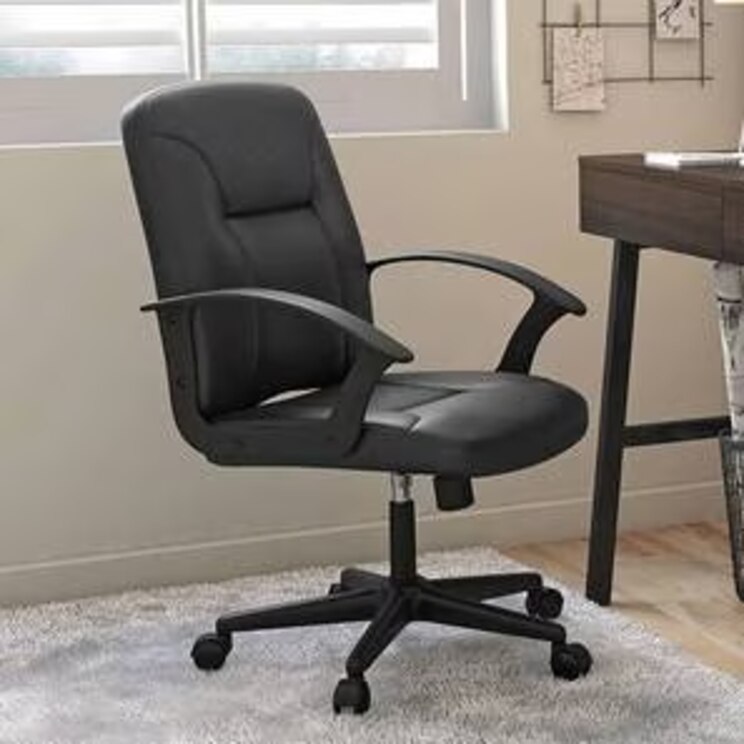
- Armrests that move away from the desk and support relaxed shoulders
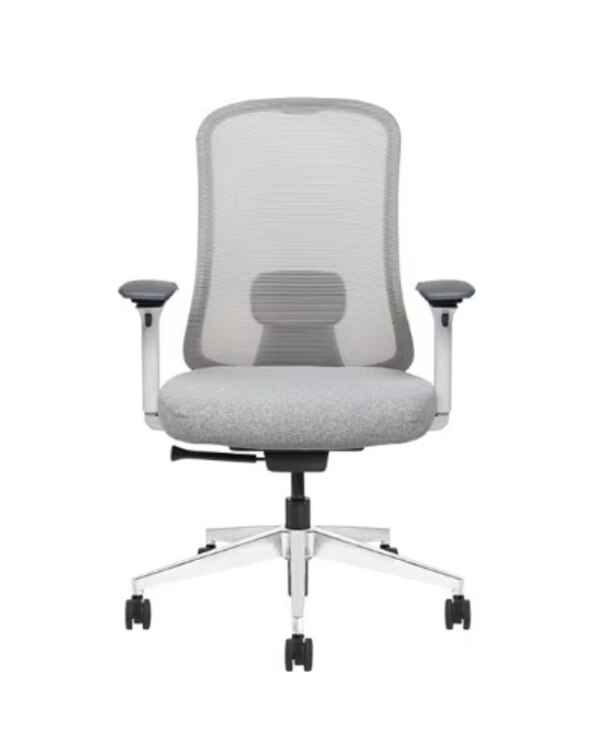
- Casters suited to the floor, with a stable five-star base
- Lumbar height or depth adjustment when users have different torso lengths
Synchro-tilt is not automatically the best choice. Compare the mechanism against simpler options before approving it.
| Mechanism | What it does | Check during computer work |
|---|---|---|
| Fixed upright | Holds one back angle | Reject it if users cannot recline without losing support |
| Task tilt | Tilts the back or seat through a controlled range | Confirm the user can change posture without sliding forward |
| Synchro-tilt | Coordinates seat and back movement | Check the tilt ratio, tension range, seat support during recline, and working-position locks |
Test short and tall users at the actual desk, not only in a showroom. Record whether feet stay supported, shoulders remain neutral, the desk approach stays unobstructed, and settings remain stable after repeated adjustments.
Compare materials, base construction, and daily-use durability
A chair that looks solid can still become unsafe on the installed floor, uncomfortable after repeated use, or impossible to repair. Assess the complete load-bearing system, then demand a sample with the proposed foam, upholstery, base, casters, gas lift, and mechanism.
| Material or component | What to check | Failure signal |
|---|---|---|
| Seat foam and cover | Compare thickness, formulation, compression behaviour, seat-pan shape, upholstery tension, and edge durability; test the actual sample | Density alone is quoted, but no repeated-use or edge test is provided |
| Mesh, fabric, or synthetic leather | Request documented cleaning limits and test the approved disinfectant on a hidden area | Discolouration, cracking, coating damage, foam breakdown, or stretched mesh |
| Five-star base and gas lift | Confirm material, load-bearing test scope, and coverage of the submitted configuration under ANSI/BIFMA X5.1, including the stated edition | The supplier cites “ergonomic” without a test report for the supplied chair |
| Casters | Match caster type to carpet or hard flooring and check rolling stability with a seated user | Sliding, snagging, tipping, or excessive effort on the installed floor |
| High-wear parts | Confirm replaceable casters, arm pads, gas lifts, and mechanisms, plus a defined spare-parts period | A failed caster or cylinder requires replacing the entire chair |
For Office Seating Faridabad in schools, hospitality areas, and public facilities, write cleaning limits and replacement commitments into the purchase specification. Ask whether technicians can replace parts without damaging the seat shell or upholstery.
Do not approve from a catalogue photograph. Run repeated-use trials, inspect seams and edges, and record pressure, wobble, noise, and looseness after testing. Account for cleaning chemicals before choosing the cover.
Test the complete chair at the desk before approving it
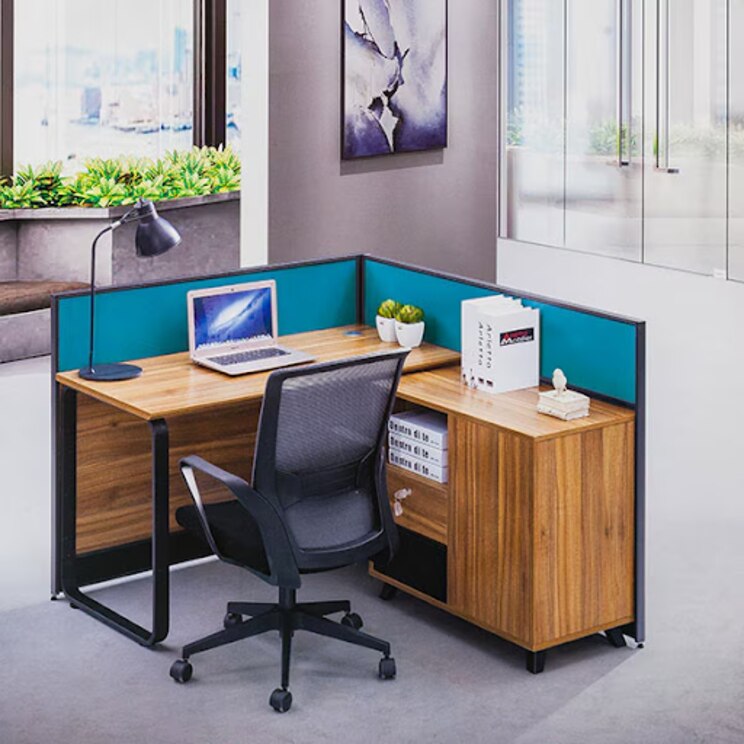
Approve a chair only after representative users test the complete chair-desk-keyboard setup, not after reading an “ergonomic” claim. A seat that feels comfortable alone can force raised shoulders, unsupported feet, or pressure beneath the thighs once the keyboard is at working height.
1. Select users from the actual population: shorter and taller staff, different body proportions, assigned eight-hour users, and hot-desk users. Give each person the submitted chair configuration, not a similar showroom model.
2. At the real desk, set the seat so both feet rest flat and the knees remain roughly 90 to 110 degrees. If raising the seat aligns the forearms with the keyboard but leaves the feet hanging, test a footrest or a height-adjustable work surface.
3. Have each user adjust seat depth, lumbar support, armrests, recline, tilt tension, and seat height while seated. Record whether each control is reachable, understandable, and effective without leaving the workstation.
4. Require several minutes of typing, mouse use, reading, and reclining. Check for pressure behind the knees, unsupported lower back, shoulder lifting, elbow contact, and interference between armrests and the desk.
5. Record the adjustment settings, user feedback, desk height, floor surface, and any failures. For Ergonomic Office Chairs Faridabad, request ANSI/BIFMA X5.1 test evidence showing the edition, scope, and exact submitted configuration; changing fabric or colour requires confirmation that the tested configuration still applies. Approve only documented pass results.
Put the manufacturer’s specification and service commitments in writing
Before selecting an Office Chair Manufacturer in Faridabad, require a signed specification that describes the submitted chair, not a catalogue promise or a similar model.
1. Request the seat-height and seat-depth ranges, lumbar-support height and firmness, recline angle, synchro-tilt ratio, tilt-tension range, armrest envelope, headrest adjustment, five-star base material, and caster type. State the desk height, keyboard position, floor type, user height range, and footrest requirement.
2. Ask for the ANSI/BIFMA X5.1 edition, test scope, test report, and model identification. Confirm that the report covers the exact foam, upholstery, mechanism, base, casters, and armrests being quoted. Changing the cover or colour can make similar-model evidence irrelevant.
3. Put cleaning and repair terms into the purchase order. Name approved cleaning agents, prohibited disinfectants, replaceable parts such as casters, arm pads, gas lifts, and mechanisms, plus the spare-parts availability period. Aggressive disinfectants can damage mesh, coatings, foam, and synthetic leather.
4. Record delivery quantity, packaging, assembly, installation, floor protection, inspection, defect replacement, warranty duration, and response times. Define acceptable installation tolerances for desk clearance, cable access, and power access.
5. For an OEM variant, attach the interface constraints and require written approval before any material or component change. Ask Kantoor Furniture By 360 Degree Interiors to identify which tested configuration applies to the proposed Office Seating Faridabad order, rather than accepting “ergonomic” as evidence.
A sample chair with the proposed foam and cover should remain available for sign-off. Density alone does not prove comfort or repeated-use durability.
Related products
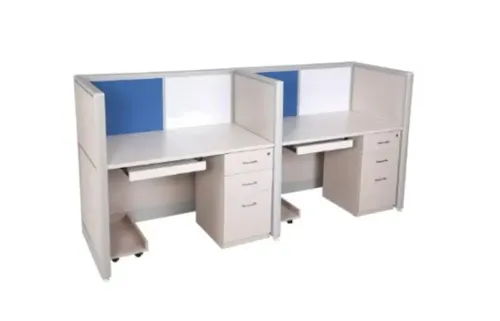
 | Workstation Series by Kantoor Furniture is a premium ergonomic seating solution designed to enhance comfort, productivity, and workplace efficiency. View product → |
 | Manager Chair Series by Kantoor Furniture is a premium office seating solution designed for managers, team leaders, executives, and professionals who require superior... View product → |
Frequently asked questions
What ergonomic measurements should you request from a chair manufacturer?
Request the seat-height range, seat-depth range, lumbar-support adjustment, armrest dimensions, and recline range. Confirm that users can keep both feet flat and their knees between 90 and 110 degrees.
Why should you test an office chair at the workstation?
Desk height, keyboard position, monitor placement, armrests, and chair movement affect comfort together. Test the complete setup to identify collisions, unsupported posture, and restricted movement.
Which chair construction details matter for daily office use?
Compare the upholstery fabric, foam density, five-star base material, caster size, gas lift, tilt mechanism, and fastener quality. Match each component to user weight, cleaning routines, and expected daily use.
What should you put in writing when selecting a manufacturer?
Record the approved chair specification, adjustment ranges, materials, load rating, warranty period, replacement-part availability, delivery schedule, installation scope, and service response time.
Related products
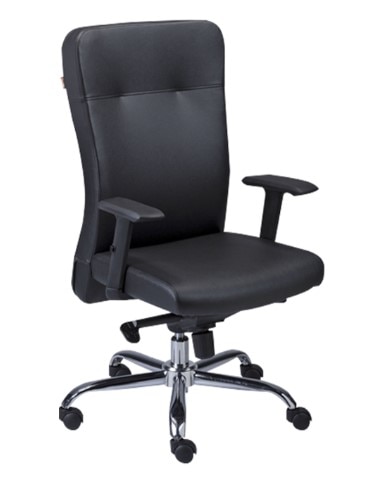 | CEO Chair Series Premium Ergonomic High-Back Executive Office Chair Kantoor Furniture By 360 Degree Interiors The Premium Ergonomic High-Back Executive Office Chair is designed for professionals who require a... View product → |
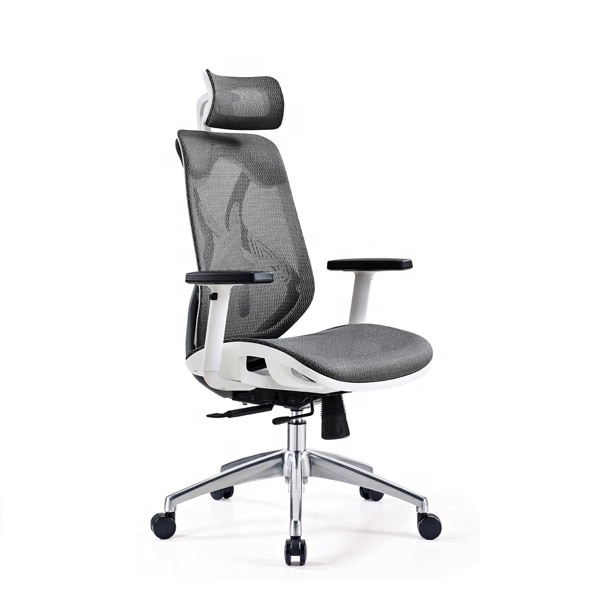 | CEO Chair Series Hyperbola ERGON MESH High Back Office Chair – Manager Premium Ergonomic High-Back Mesh Manager Chair Kantoor Furniture By 360 Degree Interiors The Hyperbola ERGON MESH High Back Office Chair – Manager is... View product → |
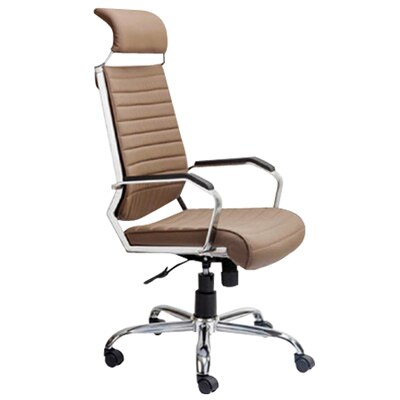 | CEO Chair Series Premium Modern High-Back Executive Ergonomic Office Chair Kantoor Furniture By 360 Degree Interiors The Sleek Series High 1 is a premium high-back executive ergonomic office chair designed for modern... View product → |
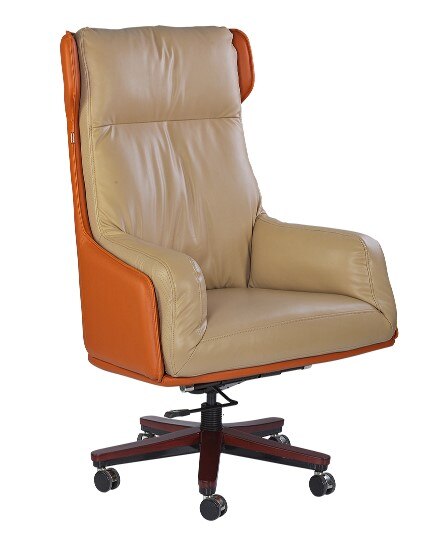 | CEO Chair Series Premium Executive High-Back Director & Boss Chair Kantoor Furniture By 360 Degree Interiors Kantoor Furniture By 360 Degree Interiors offers premium Executive High-Back Chairs, Director Chairs, Boss... View product → |
Keywords