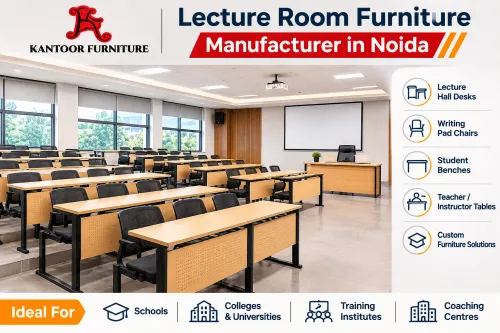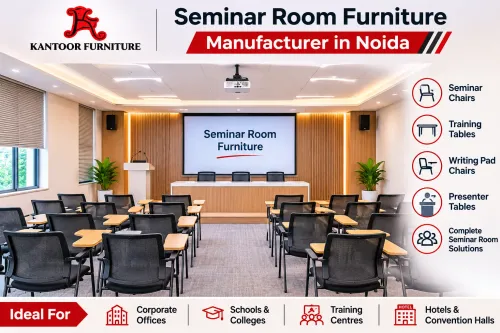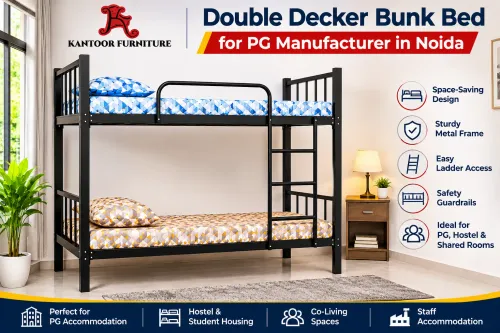
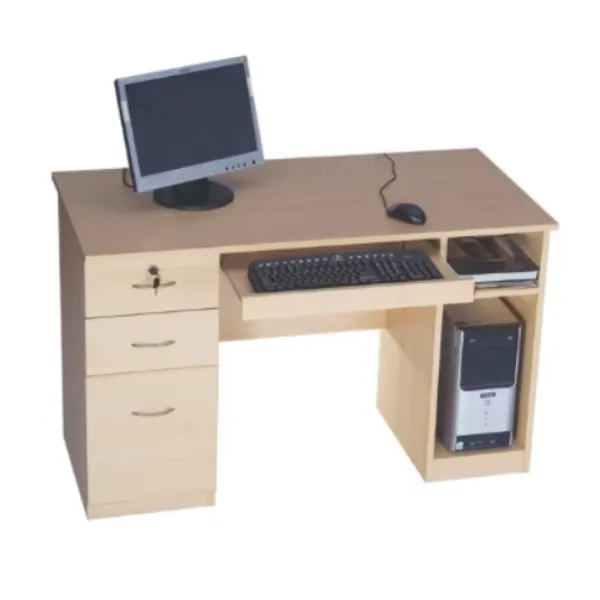
The quality and consistency of commercial furniture depend heavily on what happens before products reach the installation site. Understanding how an Office Furniture Factory operates can help businesses make more informed purchasing decisions, particularly when ordering furniture in bulk.
Office furniture manufacturing combines design, material processing, hardware selection, assembly, finishing, quality inspection, and packaging. Each stage can influence the final performance of a workstation, desk, cabinet, or other furniture product.
Product Design Starts With Functional Requirements
Manufacturing begins with product planning. Furniture intended for daily commercial use needs to account for dimensions, ergonomics, load requirements, usability, durability, and maintenance.
Design decisions may include desk dimensions, storage capacity, work surface height, frame construction, cable management, partition configuration, and hardware selection.
For institutional and corporate buyers, these specifications should relate directly to the intended application.
Material Selection Influences Performance
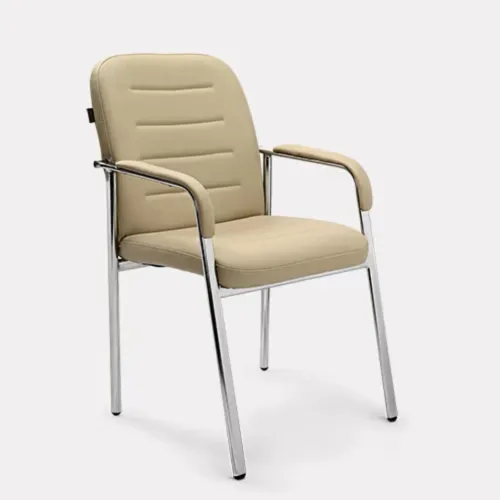
Office furniture may incorporate engineered boards, metal components, laminates, hardware, upholstery, glass, and other materials.
The appropriate material depends on the product and its expected use. A conference table, workstation, storage cabinet, and office chair have different functional requirements.
Procurement teams should therefore ask suppliers for clear material and construction specifications instead of judging products only by photographs.
Precision Helps Maintain Consistency
Bulk furniture projects often require dozens or hundreds of similar units. Consistency becomes important because variations in dimensions, finishing, colour, or hardware can become noticeable across a large office.
Manufacturing processes that use controlled measurements and repeatable production methods can help maintain consistency between units.
This is particularly relevant for projects in Noida where several departments may be furnished during the same commercial fit-out.
Quality Checks Reduce Installation Problems
Quality inspection can take place at different stages of production. Components may be checked before assembly, while finished furniture can be inspected for dimensions, surface finishing, hardware operation, structural stability, and appearance.
A strong quality process can help identify issues before products are dispatched to the customer.
Bulk Production Requires Project Coordination
Manufacturing capacity also matters when a project has a strict completion schedule. Large orders need production planning, material availability, assembly scheduling, packaging, transportation, and site coordination.
Buyers should clarify expected production timelines and understand how changes to specifications may affect delivery.
Kantoor Furniture By 360 Degree Interiors operates in the Noida market, serving organisations that require office, commercial, and institutional furniture solutions. Buyers evaluating an Office Furniture Factory should look beyond production volume and consider design capability, material specifications, quality control, customisation, and project coordination.
Understanding manufacturing gives procurement managers a better basis for evaluating suppliers. It also helps organisations ask more useful questions before committing to a large furniture purchase.
5: How To Compare Options From Modular Office Furniture Manufacturers
Businesses planning a new office often discover that modular furniture can be configured in numerous ways. Comparing Modular Office Workstations Manufacturers therefore requires more than looking at product photographs or catalogue prices.
Different manufacturers may approach design, materials, customisation, manufacturing, installation, and service differently. A structured comparison helps buyers understand which specifications are actually relevant to their project.
Start With The Workplace Requirement
Before comparing manufacturers, define the furniture requirement.
Consider total employee count, department-wise seating, available floor area, required storage, meeting spaces, privacy requirements, technology needs, and expected future expansion.
A manufacturer should be evaluated according to how effectively its solutions address these requirements.
Compare Construction Alongside Appearance
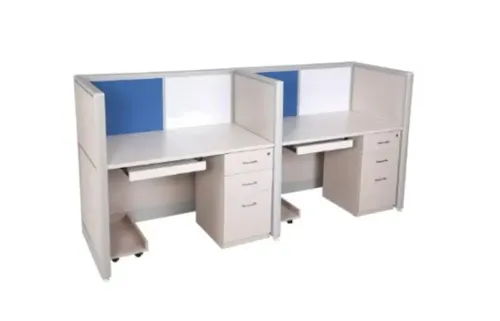
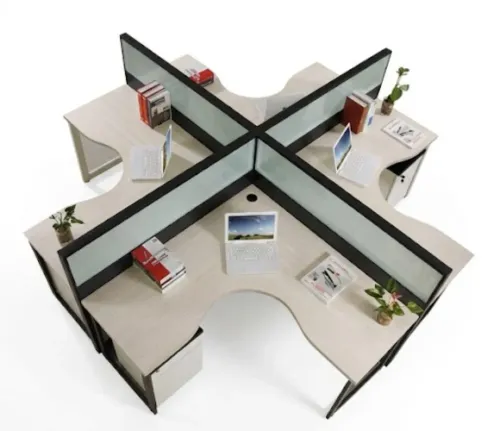
Furniture can look similar while differing considerably in construction. Procurement teams should examine the materials used for work surfaces, frames, partitions, storage units, hardware, and supporting components.
For workstations, useful considerations include work surface material and thickness, frame construction, partition configuration, cable management, hardware quality, and storage capacity.
The exact specification should be selected according to the application rather than a generic standard.
Customisation Can Solve Space Constraints
Standard furniture dimensions may not always suit an existing office. Columns, structural walls, windows, electrical points, and circulation paths can affect the available area.
Custom manufacturing can help address unusual dimensions and specific layout requirements. This can be useful for offices in Noida where commercial spaces may have different floor plans and infrastructure arrangements.
However, customisation should be based on functional requirements rather than unnecessary design complexity.
Installation Is Part Of The Purchase
A furniture project can encounter problems if installation is treated as an afterthought. Workstations may need alignment, cable routing, partition installation, storage positioning, and coordination with electrical work.
Buyers should clarify who handles installation, how site measurements are verified, and what happens if site conditions differ from the original plan.
Future Reconfiguration Adds Long-Term Value
Modular furniture can be particularly useful when companies anticipate organisational changes. A workstation arrangement may need to accommodate new employees, department movement, or changes in working patterns.
Manufacturers should therefore be assessed on how easily their systems can be adapted after installation.
For organisations evaluating Modular Office Workstations Manufacturers in the Delhi NCR market, Kantoor Furniture By 360 Degree Interiors provides office and commercial furniture solutions from Noida. A meaningful comparison should ultimately focus on fit, construction, flexibility, manufacturing capability, installation support, and long-term usability.
This approach gives procurement teams a clearer basis for making a furniture decision that fits both current operations and future workplace requirements.
Keywords